
Chapter 1
The Official Narrative
What Indian textbooks tell you about Ibrahim Lodi — and the documented truths they systematically leave out.
What Indian textbooks tell you about Ibrahim Lodi — and the documented truths they systematically leave out.
Open any standard Indian history textbook — NCERT, state board, or private — and search for Ibrahim Lodi. You will find, at most, two to three sentences:
That's it. An entire nine-year reign of documented tyranny, religious persecution, temple desecration, and the execution of a Brahman for defending Hinduism — reduced to a footnote about a single battle.
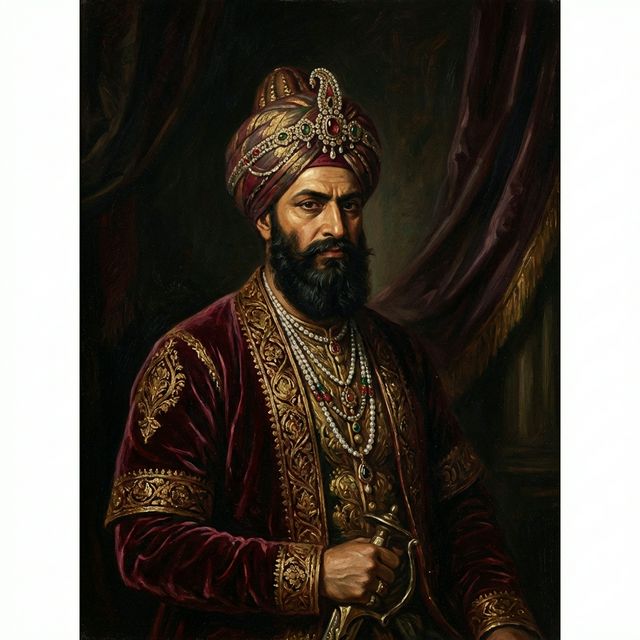
The primary historical chronicles paint a dramatically different picture. Ibrahim Lodi was described by medieval historians as tyrannical, greedy, and cruel. His documented record includes:
"Ibrahim Lodi was the last sultan of the Delhi Sultanate. He was defeated at Panipat."
"The Lodi dynasty was an Afghan dynasty that ruled the Delhi Sultanate."
"The Battle of Panipat in 1526 marked the end of the Sultanate period."
No mention of religious persecution, temple destruction, or the execution of the Brahman.
Ibrahim Lodi was a tyrannical ruler who poisoned, imprisoned, and executed his own nobles.
He ordered wholesale desecration of Hindu temples and imposed Islamic law through Sharia courts on non-Muslim subjects.
He permitted the execution of a Brahman who stated that Hinduism was as truthful as Islam.
His cruelty was so extreme that his own nobles invited Babur to invade India to overthrow him.
The systematic omission of Ibrahim Lodi's documented atrocities from Indian textbooks is not accidental. It is part of a broader pattern of historiographical whitewashing that has been documented by scholars like Arun Shourie in Eminent Historians: Their Technology, Their Line, Their Fraud.
When an entire generation grows up not knowing that their ancestors' temples were systematically desecrated, that their religious scholars were executed for practicing their faith, and that Islamic law was imposed on non-Muslim communities — they lose their historical consciousness. They are unable to understand the cultural wounds that persist today.
Ibrahim Lodi was not an isolated case. He was the third generation of a dynasty — following Bahlul Lodi and Sikandar Lodi — that systematically persecuted Hindus, destroyed temples, and imposed discriminatory laws. Yet textbooks mention none of this.
The same historiographical framework that whitewashes Ibrahim Lodi also minimizes the documented atrocities of Alauddin Khilji, Ghiyasuddin Tughlaq, Aurangzeb, and many others. The Bharat Files Initiative exists to systematically correct this record.